 |
| The closest thing I've got to the ocean, a huge "See" (in German) or lake. |
Showing posts with label Nürnberg. Show all posts
Showing posts with label Nürnberg. Show all posts
Thursday, September 8, 2011
A Thursday Regular-- By the 'See'
A view of Dutzendteich on a lovely summer day, when all the boats came out to play. The Colosseum you see there in the background is one of several constructions built on what is the former Nazi Party Rally Grounds. Today its a museum.


Wednesday, September 7, 2011
The Mystery of the Smiling Pig
Riding on the number 6 Tram line, I've often passed by a red and white sign that reads "SAU, SAU, HURRA!" with a big smiling pink pig. I never cared enough to look into it further, but I thought it was a strange sign for a restaurant. Would a restaurant really only serve pork? And it didn't look like a Metzegerei/butcher either. Finally the other day I came across my answer.
While looking for a restaurant online, I stumbled upon this website:
Freunde des Fränkischen Schäufele n.n.E.v
Its a club for people who love Shäufele! How funny is that?! (Shäufele is a pork dish using the meat from the shoulder of a pig. Its served still on the bone so it has a kind of scoop-shape to it. I've never actually tried it though.)
If you click on the link, you can see the sign that I was talking about in the upper left hand corner along with a photo of the club members. If you scroll all the way to the bottom, you'll even see a massive pig-shaped float that they used in the Fastnachtszug.

I guess that's one way of keeping traditions alive.
While looking for a restaurant online, I stumbled upon this website:
Freunde des Fränkischen Schäufele n.n.E.v
Its a club for people who love Shäufele! How funny is that?! (Shäufele is a pork dish using the meat from the shoulder of a pig. Its served still on the bone so it has a kind of scoop-shape to it. I've never actually tried it though.)
If you click on the link, you can see the sign that I was talking about in the upper left hand corner along with a photo of the club members. If you scroll all the way to the bottom, you'll even see a massive pig-shaped float that they used in the Fastnachtszug.

I guess that's one way of keeping traditions alive.
Wednesday, August 31, 2011
A Thursday Regular-- A Secret Garden
Decided to start up a little project for myself. Every Thursday, starting from today, I'll be posting a new picture from my adopted home town of Nuremberg. A little project to encourage me to look a little more closely at the streets and people I pass by daily. Hope you enjoy it!
First up, a funny little dwarf-statue I found in the Baroque-style 'Garden of Hesperides' tucked away in the section of town called Johannis. It was such a lovely little surprise to stumble upon. Hidden from the street, its entrance can only be found by walking through the pub Barockhäusle (Johannisstraße 47).
PS. Happy September 1st everyone! (I'm not really sure why Blogger keeps posting a day behind the real date. So don't mind the Wednesday date there.) ;)
First up, a funny little dwarf-statue I found in the Baroque-style 'Garden of Hesperides' tucked away in the section of town called Johannis. It was such a lovely little surprise to stumble upon. Hidden from the street, its entrance can only be found by walking through the pub Barockhäusle (Johannisstraße 47).
 |
| Why hello there. |
PS. Happy September 1st everyone! (I'm not really sure why Blogger keeps posting a day behind the real date. So don't mind the Wednesday date there.) ;)
Monday, January 17, 2011


Monday, December 13, 2010
Crispety, crunchety, peanut buttery...

It usually happens like this: An older man or woman comes up to the stand. They scan it, nothing really interests them but then they spot the yellow wrapper and get excited. If they have a grandchild next to them, they turn to them and start telling them a story, if they are by themselves, they start telling me. All the stories start with, "Nach dem Krieg..."
At the end of World War II, the American soldiers went around in tanks giving out candy to the kids--candy which included Hershey's (our other big seller) and Butterfingers. So these post-war kids are now full-fledged graying German grandmas and grandpas, but the look on their face would make you think otherwise. The other day, one very proper looking older lady, with her hair all done up and sporting a thick animal fur coat walked up to our stand and with a sheepish look grabbed three. She told her husband, "Sorry, I just have to have them."
Butterfingers themselves may not inspire much in people nowadays, but amazingly enough, to a certain demographic they represent a very significant part of their life.... and I find that pretty cool.
Wednesday, December 1, 2010
Its schneen and snowin...
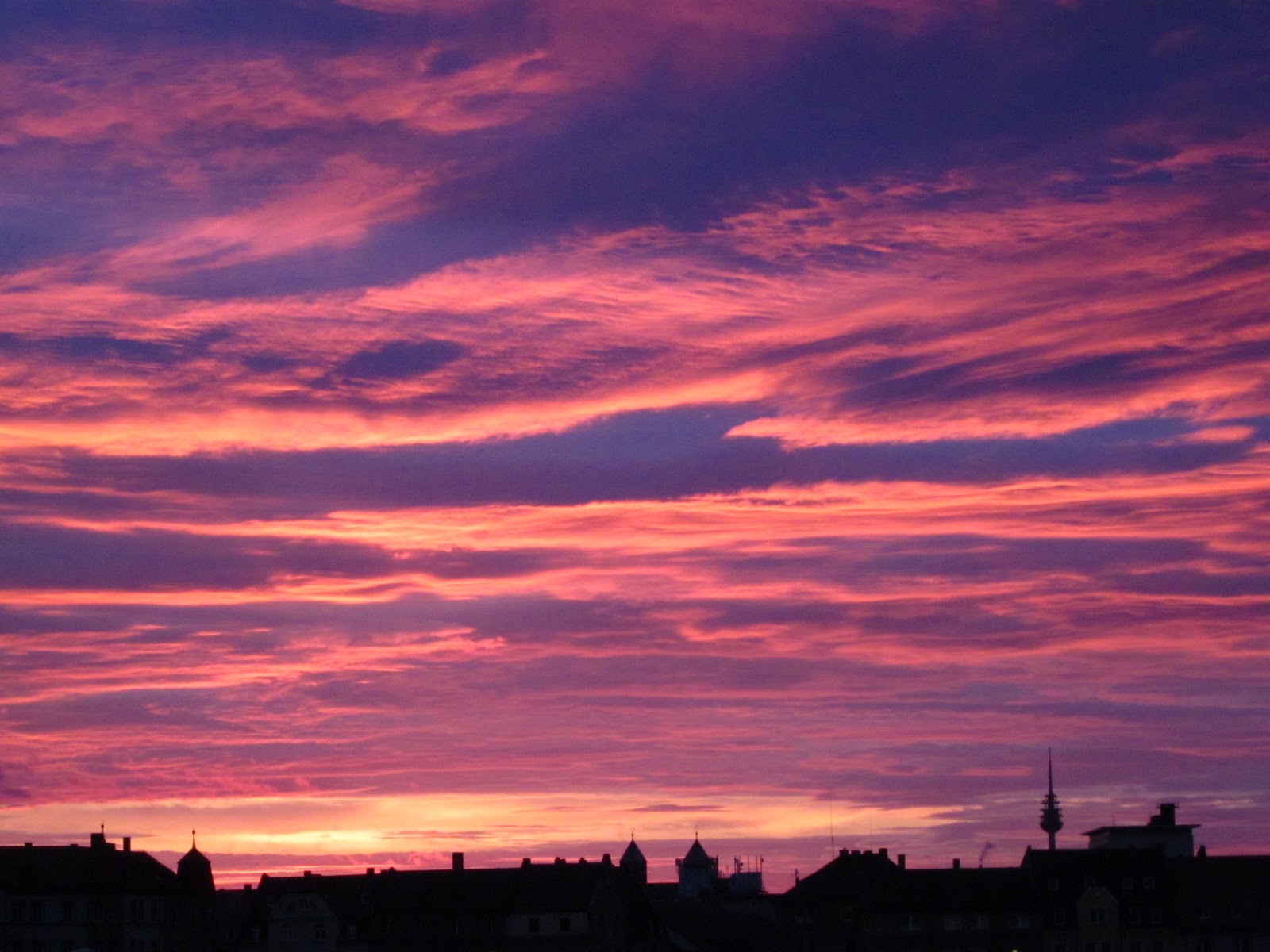
Its been snowing almost everyday for a week. Not massive amounts, but enough to disrupt the VGN and make all the trams and trains late.

At least it looks pretty though...
Welcome to December!

At least it looks pretty though...
Welcome to December!
Monday, October 11, 2010
Leaving the world war image behind...
When Americans think of Germany, the Nazis and Hitler are certainly one of the first things they think of. World War II has major appeal to many, perhaps because what happened was so beyond comprehension or because America played a big part in helping to defeat the 'ultimate evil' of that time. Certainly the media plays a role as well. With the exception of lederhosen and beer, Germany doesn't really get recognized for too much else in pop culture. Without even doing a search, I can list a handful of movies/shows that reinforce this: Eurotrip, the Simpsons, Inglorious Bastards, Schindler's List, La Vita e Bella, The Pianist and the list goes on.
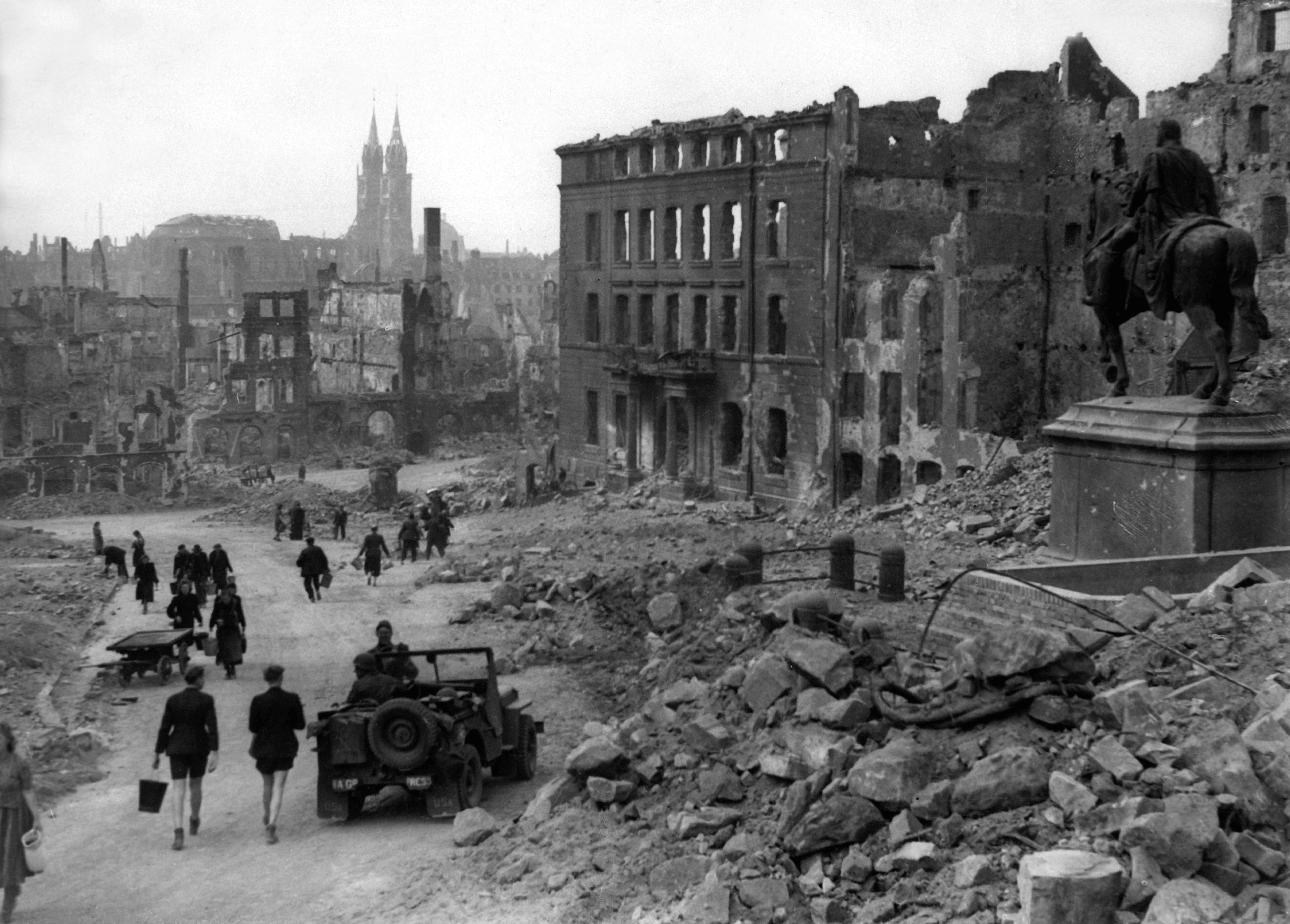
Nuremberg is certainly an important city in regards to this historical time period, but its easy to forget how recent this history is. Nuremberg, like many German cities in 1945, was 90% destroyed by bombs. The fact that I can walk along streets that less than 70 years ago were entirely rubble (see picture below) is a bit mind-numbing. The former Adolf Hitler Platz (which became the name of many main markets during the war) is now back to being the normal Hauptmarkt where you can buy fresh flowers and fruits and vegetables at most times of the year. With the exception of the Dokuzentrum, the former Nazi Party rally grounds (a bit outside of the city--which is now a huge park) and a few photos/postcards, one would never guess.

Though they are force-fed Second World War history every year in school (and I’ve been told it is required by some schools for the students to visit a concentration camp), Germans certainly don't walk around with their heads down. The war still continues to effect politics in many ways but even that is beginning to change. Germany isn’t just willing to pay for things anymore out of guilt, and they have and continue to contribute to the economy, technologies and sciences in Europe and in the world at large.
If you consider that they started and (lost) two major world wars, had their cities bombed to the ground, their country split in half (one under socialist ideology and the other capitalist) and then unified together again all in just 65 years, and yet still manage to hold their own on a global scale--I think they deserve some credit.
Nuremberg is certainly an important city in regards to this historical time period, but its easy to forget how recent this history is. Nuremberg, like many German cities in 1945, was 90% destroyed by bombs. The fact that I can walk along streets that less than 70 years ago were entirely rubble (see picture below) is a bit mind-numbing. The former Adolf Hitler Platz (which became the name of many main markets during the war) is now back to being the normal Hauptmarkt where you can buy fresh flowers and fruits and vegetables at most times of the year. With the exception of the Dokuzentrum, the former Nazi Party rally grounds (a bit outside of the city--which is now a huge park) and a few photos/postcards, one would never guess.
Though they are force-fed Second World War history every year in school (and I’ve been told it is required by some schools for the students to visit a concentration camp), Germans certainly don't walk around with their heads down. The war still continues to effect politics in many ways but even that is beginning to change. Germany isn’t just willing to pay for things anymore out of guilt, and they have and continue to contribute to the economy, technologies and sciences in Europe and in the world at large.
If you consider that they started and (lost) two major world wars, had their cities bombed to the ground, their country split in half (one under socialist ideology and the other capitalist) and then unified together again all in just 65 years, and yet still manage to hold their own on a global scale--I think they deserve some credit.
Saturday, July 18, 2009
Neu Perspektive an der Altstadt
Usually a visit to Nürnberg means walking along Königstraße and the streets running perpendicular to it, visiting some shopping centres, eating eis, and perhaps enjoying the views of the old medieval skyline along the river. This time however, I thought I would change it up a bit and take the tour of the altstadt, given by one of the tour guides from the Touristen-Büro (its the only official tour in English offered to the public, at 1pm every day of the week in front of the Hauptmarkt Tourism Office).
It was worth every Euro--thanks of course to the fact that the city has an incredibly fascinating history, but also because Erika Jordan, our Mexican born, German tour guide had an incredible amount of knowledge on the history of the city and really took her time to show us as much as she could (the tour lasted almost 3 hours!) That's her underneath showing us St. George, the patron of the house there and the famous painting of the rabbit by Albrecht Dürer.

I am glad I got to know a little bit more about my future home (we are currently looking for an apartment in the city for September)... and while you may know little or lots about this place already, I thought I'd share a few interesting things I learned yesterday. Maybe it might even spark your interest in coming to see this beautiful place for yourselves one day.
1) Nuremberg (the English spelling for the city) is known for its Lebkuchen (or Christmas cookie that is similar to gingerbread), the Nürnberger sausages (which are nothing more than tiny sausages about the size of your ring finger), Albrect Dürer (the 15th century painter), it's wealthy and significant historical past during the time of the Holy Roman Empire in the Middle Ages, the Nazi Party Rallies & War Trials in the 20th century, and the Kristkindlmarkt (the world famous Christmas market held every year, 4 weeks before Christmas Eve in the Hauptmarkt).
2) The old city is divided into two parts named after the two largest churches: the St. Lorenz and St. Sebald sections. The river Pegnitz cuts the city into almost even sized parts and runs directly through the middle, east to west.

3) During WWII, Nürnberg was the center of the Nazi party where most of the rallies were held. Hauptmarktplatz was renamed (as in all major German cities during the 30s) Adolf Hitler Platz and banners adorned with swastikas were mandatory on the homes and businesses in the square. Hitler began building a colloseum (which is in the outskirts of the city) he hoped to fit 400,000 people (Nuremberg's population is only 600,000), yet it was never completed due to the end of the war.
4) From 1933-1935, the city came up with a plan to save the historic artwork and architecure of the town just in case war broke out. A few years later, with the beginning of World War II, the city put the plan into action and removed everything of value from the museums and churches (including all the glass from the stained glass windows) and placed them into the underground tunnels that were built back in the 1500s for the beer breweries. As a result of this enormous effort on the part of the city, the majority of of the city's art and historical pieces still remain.
5) 90% of the city was destroyed in the bombing of the war, yet Nuremberg is one of the few cities (unlike Cologne or Frankfurt) that chose to try and rebuild the city as much as possible keeping the architecture and character of the medieval city that Nuremberg was before the war. (This by the way really gives the city charm ;).


6) In addition to Dürer, Nuremberg is home to the inventor of the first pocket watch (originally built in the shape of an egg that women found fashionable to wear around their necks) and to Levi Strauss, inventor of the blue jeans.
Looking forward to making Nuremberg my home. Then I will really take the time to get to know as much as I can about it.
:) Good times ahead.
It was worth every Euro--thanks of course to the fact that the city has an incredibly fascinating history, but also because Erika Jordan, our Mexican born, German tour guide had an incredible amount of knowledge on the history of the city and really took her time to show us as much as she could (the tour lasted almost 3 hours!) That's her underneath showing us St. George, the patron of the house there and the famous painting of the rabbit by Albrecht Dürer.

I am glad I got to know a little bit more about my future home (we are currently looking for an apartment in the city for September)... and while you may know little or lots about this place already, I thought I'd share a few interesting things I learned yesterday. Maybe it might even spark your interest in coming to see this beautiful place for yourselves one day.
1) Nuremberg (the English spelling for the city) is known for its Lebkuchen (or Christmas cookie that is similar to gingerbread), the Nürnberger sausages (which are nothing more than tiny sausages about the size of your ring finger), Albrect Dürer (the 15th century painter), it's wealthy and significant historical past during the time of the Holy Roman Empire in the Middle Ages, the Nazi Party Rallies & War Trials in the 20th century, and the Kristkindlmarkt (the world famous Christmas market held every year, 4 weeks before Christmas Eve in the Hauptmarkt).
2) The old city is divided into two parts named after the two largest churches: the St. Lorenz and St. Sebald sections. The river Pegnitz cuts the city into almost even sized parts and runs directly through the middle, east to west.

3) During WWII, Nürnberg was the center of the Nazi party where most of the rallies were held. Hauptmarktplatz was renamed (as in all major German cities during the 30s) Adolf Hitler Platz and banners adorned with swastikas were mandatory on the homes and businesses in the square. Hitler began building a colloseum (which is in the outskirts of the city) he hoped to fit 400,000 people (Nuremberg's population is only 600,000), yet it was never completed due to the end of the war.
4) From 1933-1935, the city came up with a plan to save the historic artwork and architecure of the town just in case war broke out. A few years later, with the beginning of World War II, the city put the plan into action and removed everything of value from the museums and churches (including all the glass from the stained glass windows) and placed them into the underground tunnels that were built back in the 1500s for the beer breweries. As a result of this enormous effort on the part of the city, the majority of of the city's art and historical pieces still remain.
5) 90% of the city was destroyed in the bombing of the war, yet Nuremberg is one of the few cities (unlike Cologne or Frankfurt) that chose to try and rebuild the city as much as possible keeping the architecture and character of the medieval city that Nuremberg was before the war. (This by the way really gives the city charm ;).


6) In addition to Dürer, Nuremberg is home to the inventor of the first pocket watch (originally built in the shape of an egg that women found fashionable to wear around their necks) and to Levi Strauss, inventor of the blue jeans.
Looking forward to making Nuremberg my home. Then I will really take the time to get to know as much as I can about it.
:) Good times ahead.
Subscribe to:
Posts (Atom)